
Massenet, Méditation
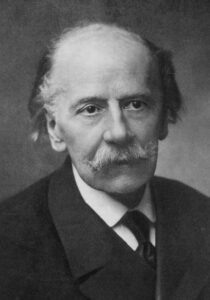 The Belle Époque describes a peaceful and prosperous era between two catastrophic European wars: the end of the Franco-Prussian War in 1871 and the onset of World War I in 1914. Major advances in science and technology were accompanied by a flourishing of arts, literature, and music, and Jules Massenet (1842-1912) would become one of the most prominent composers of opera in this era.
Massenet began his studies in piano at the Paris Conservatory as an adolescent. He would eventually study composition with Ambroise Thomas and win the coveted Prix de Rome in 1863. That contest, whose prior winners included Berlioz and Bizet, awarded the winner three years of study in Italy. Massenet returned to Paris in 1866 and taught piano privately while actively composing. His professional progress was interrupted by the Franco-Prussian War in which he served as a volunteer in the National Guard.
With the opera Le roi de Lahore in 1877, Massenet had his first real success. The Paris premiere was quickly followed by performances in Italy, Germany, and England. He received a faculty appointment to the Paris Conservatory in 1878. His students there included Ernest Chausson and Reynaldo Hahn.
Méditation was written for solo violin and orchestra as an instrumental interlude in the opera Thaïs (1894) occurring between two scenes of Act II. Based on the 1890 novel Thaïs by Anatole France, the story is set in Egypt in the late days of the Roman Empire. A cenobitic monk, Athanaël, leaves his monastery and travels to Alexandria to convert Thais, a courtesan who worships Venus. She initially rejects his efforts but upon reflection (the Méditation) she converts and is led by Athanaël to a convent. Unfortunately, Athanaël’s Christian zeal yields to a passionate desire for Thais and he leaves his monastery only to find Thais on her deathbed describing a vision of Heaven.